O. R. Tambo International Airport
| O. R. Tambo International Airport Johannesburg International Airport | |||||||||||||||
|---|---|---|---|---|---|---|---|---|---|---|---|---|---|---|---|
 | |||||||||||||||
 | |||||||||||||||
| Summary | |||||||||||||||
| Airport type | Public | ||||||||||||||
| Owner | Airports Company South Africa | ||||||||||||||
| Serves | Johannesburg, South Africa Pretoria, South Africa | ||||||||||||||
| Location | Kempton Park, Ekurhuleni, Gauteng, South Africa | ||||||||||||||
Hub for |
| ||||||||||||||
| Time zone | SADT (UTC+02:00) | ||||||||||||||
| Elevation AMSL | 5,558 ft / 1,694 m | ||||||||||||||
| Coordinates | 26°08′00″S 028°15′00″E / 26.13333°S 28.25000°E / -26.13333; 28.25000Coordinates: 26°08′00″S 028°15′00″E / 26.13333°S 28.25000°E / -26.13333; 28.25000 | ||||||||||||||
| Website | ortambo-airport.com | ||||||||||||||
| Map | |||||||||||||||
  JNB Location in the Johannesburg area Show map of Greater Johannesburg 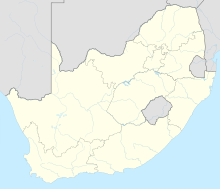 JNB JNB (South Africa) Show map of South Africa 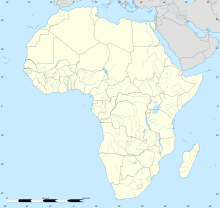 JNB JNB (Africa) Show map of Africa | |||||||||||||||
Runways | |||||||||||||||
| |||||||||||||||
| Statistics (Apr 2017 - Mar 2018) | |||||||||||||||
| |||||||||||||||
Source: Passenger Statistics[2] | |||||||||||||||
O. R. Tambo International Airport (IATA: JNB, ICAO: FAOR, formerly FAJS) (ORTIA) is a major international airport in Kempton Park, Ekurhuleni, Gauteng, South Africa,[3] near the city of Johannesburg and, to a lesser extent, the executive capital Pretoria. It serves as the primary airport for domestic and international travel to/from South Africa and is Africa's busiest airport with a capacity to handle up to 28 million passengers annually[4] with non-stop flights to all continents except Antarctica. The airport is the hub of South Africa's largest international and domestic carrier, South African Airways (SAA), and a number of smaller local airlines. The airport handled a total of over 21 million passengers in 2017.
It was originally known as Jan Smuts International Airport,[5] after the former South African Prime Minister of the same name. The airport was renamed Johannesburg International Airport in 1994 when the newly elected African National Congress government implemented a policy of not naming airports after politicians. The policy was reversed later, and the airport was renamed again on 27 October 2006 after Oliver Reginald Tambo; a former President of the African National Congress.[6] The airport has non-stop services to all six inhabited regions of the world.[7][not in citation given]
Contents
1 History
2 Airport information
2.1 South African Airways Museum
2.2 Aircraft Viewing Decks
3 Infrastructure
3.1 Runways
3.2 Taxiways and Aprons
4 Developments
5 Terminals
6 Airlines and destinations
6.1 Passenger
6.2 Cargo
7 Traffic and statistics
7.1 Passenger traffic
7.2 Aircraft movements
8 Other buildings
9 Ground transport
9.1 Rail transit
9.2 Car
9.3 Bus
10 Accidents and incidents
11 See also
12 References
13 External links
History
The airport was founded in 1952 as "Jan Smuts Airport," two years after his death, near the town of Kempton Park on the East Rand. It replaced the "Palmietfontein International Airport," which had handled European flights since 1945.
In 1943, a decision was by the cabinet of the Union of South Africa to construct three international airports with a Civil Airports Advisory Committee formed to investigate and report on the viability.[8]:224 That report was submitted to the cabinet in March 1944 with one main international airport on the Witwatersrand and two smaller international airports at Cape Town and Durban.[8]:224 The South African Railways and Harbours Administration was given the role of managing the project and later in 1944, a member sent to the USA to study standards and methods of construction.[8]:224-5 Four possible sites around Johannesburg were identified, with one south of Johannesburg chosen but soon discarded due to being situated on land with gold bearing reefs below.[8]:225 Sites were then narrowed down to Kempton Park and the existing airport at Palmietfontein.[8]:225
Layouts and rough costing for the two sites were established and submitted for a ministerial decision.[8]:226 The site would be at Kempton Park and be named Jan Smuts Airport.[8]:226 The area outside Kempton Park, was an expropriated undulating dairy farm of 3,706 acres with a 598 acre eucalyptus plantation.[8]:227 Sitting on a plateau, the area sloped away towards the east.[8]:227 The area was drained by the Blesbok River.[8]:227
In the late fifties jet passenger aircraft became the norm and there was a need to expand the existing ground facilities at the airport and this began in the sixties and early seventies. In addition to the new airside facilities, ground developments included improved road access, parking areas, hotel, retail areas and car hire.[9]:50
The late sixties saw a new choice of aircraft for South African Airways, the Boeing 747.[10]:339 A decision was made by the Minister of Transport of three, later five 747s for the airline.[10]:339 Delivery would begin in October 1971 with the first flight to London on 10 December 1971 with daily services from February 1972.[10]:339 These purchases however required new hangar facilities with the contract awarded in September 1969 initially worth R2,983,408.[10]:339 Construction started in December 1968 and was completed in October 1971 for R8 million while other work at the airport associated with the arrival of these new aircraft brought the costs to R40 million.[10]:341 Other new buildings such as workshops, testing facilities, stores, staff accommodation and air cargo handling building were built. The new hangar would allow for two 747s with each bay with dimensions of 73.2 m wide, 24.4 m high and a depth of 91.4 m.[10]:341
It was used as a test airport for the Concorde during the 1970s, to determine how the aircraft would perform while taking off and landing at high elevations ('hot and high' testing).[11] During the 1980s, many countries stopped trading with South Africa because of the United Nation sanctions imposed against South Africa in the struggle against apartheid, and many international airlines had to stop flying to the airport. These sanctions also resulted in South African Airways being refused rights to fly over most African countries, and in addition to this, the risk of flying over some African countries was emphasised by the shooting down of two passenger aircraft over Rhodesia (eg. Air Rhodesia Flight 825 and 827),[12] forcing them to fly around the "bulge" of Africa. This required specially-modified aircraft like the long-range Boeing 747SP. A second runway was built at the airport in the late 1980s.[9]:50
In December 1993, a R120 million upgrade at the airport was completed.[13]:14 The main part of the projects was a 880 m, 3000 t steel airside corridor consisting of two levels high of 6 m wide with thirteen passenger bridges.[13]:14 The upper levels are connected the departure lounges through security screening points. Lower levels are for arrivals for entry into the immigration and custom areas.[13]:14 A future provision for extensions to this airside corridor was included in the design.[13]:14 A new airside bus terminal was also added for bussing in passengers to aircraft not able dock next to the terminal. Other parts of the project included upgrading the terminal facilities for the passengers.[13]:14
Following the ending of apartheid, the airport's name, and that of other international airports in South Africa, were changed and these restrictions were lifted. With the creation of the Airports Company of South Africa (ACSA) in the mid-nineties, a plan to commercialise the airport begun with new passenger and retail and airside facilities to handle a larger amount of planes completing this phase in 2004.[9]:50
The airport overtook Cairo International Airport in 1996 as the busiest airport in Africa[14] and is the fourth-busiest airport in the Africa–Middle East region after Dubai International Airport, Hamad International Airport, and Abu Dhabi International Airport. In fiscal year 2010, the airport handled 8.82 million departing passengers.[15]
In late 2005, a name change was proposed for the airport to "O. R. Tambo International", after former ANC President and anti-apartheid activist Oliver Reginald Tambo, an apparent change to the precedent of neutrally-named airports. The name change was formally announced in the Government Gazette of South Africa on 30 June 2006, allowing a 30-day window for the public to register objections. The name change was implemented on 27 October 2006 with the unveiling of new signs at the airport. Critics noted the considerable expense involved in renaming the airport, and the decision to use a politician as the name would be obscure, confusing and in some instances, offensive. Corne Mulder of the Freedom Front Plus has stamped the renaming "nothing less than political opportunism and attempts by the ANC government to dodge the true socio-economic issues of the country".[16] Unnecessary confusion can be caused, for O. R. Tambo is also a district municipality in the Eastern Cape, seated in Mthatha. The town of Mthatha has an international airport known as Mthatha Airport, formerly named the K. D. Matanzima Airport after former Transkei President Kaiser Matanzima.
On 26 November 2006, the airport became the first in Africa to host the Airbus A380.[17] The aircraft landed in Johannesburg on its way to Sydney via the South Pole on a test flight.
There was no provision for rapid train access until 2010, when the Gautrain project would allow train passengers to reach the airport from the Johannesburg CBD, Sandton and Pretoria.[9]:50
Airport information

An O.R Tambo bust at the aircraft viewing deck above the CTB.
O. R. Tambo International Airport is a hot and high airport. Situated almost 1,700 metres (5,500 feet) above mean sea level, the air is thin.[18] This means some aircraft must reduce weight by loading less fuel than they would otherwise. The thinner air is also the reason for the longer than usual runways. On some routes such as to North America, it means flights from Johannesburg need to refuel en-route while the return flight originating from a lower altitude airport can upload enough fuel to reach Johannesburg non-stop.
O. R. Tambo International Airport is one of only three airports in the Africa-Middle East region-as well as the only one properly located in Africa-that has non-stop flights to all six inhabited continents, the other two being Dubai International Airport and Doha International Airport.
On 10 January 2013 the airport's ICAO code was changed from FAJS to FAOR.[19]
South African Airways Museum
O. R. Tambo International Airport used to serve as grounds for the South African Airways Museum. This room full of South African Airways memorabilia was started by two fans of the airline as a temporary location until they could set it up in one of Jan Smuts International's buildings in 1987. The museum has since relocated to Rand Airport (FAGM).
Aircraft Viewing Decks
The airport has two viewing decks. One is located above the Central Terminal Building, and the other in an administrative section of the airport above the international check-in counters. There are regular displays of Oliver Reginald Tambo, the airport's namesake in the viewing decks.
Infrastructure

Inside the O. R. Tambo International Airport.

OR Tambo terminal buildings

Check in for the International Terminals.
Runways
O. R. Tambo International Airport has two runways (one pair of parallel runways) adjacent to the airport's terminal buildings. There used to be a third runway, 09/27, but was closed due to the danger it posed. It is now taxiway Juliet.
| Number | Length | Width | ILS | Notes |
|---|---|---|---|---|
| 03L/21R | 4421m[20] | 60m[20] | PALS CAT II[20] | Fully laden aircraft require a far greater length of runway to achieve take-off velocity at this altitude. It is the 33rd longest runway in the world. |
| 03R/21L | 3405m[21] | 60m[21] | PALS CAT II[21] |
Furthermore all runways are equipped with Approach Lighting Systems. Sequenced flashers are not used at any South African runways and therefore not installed. Touchdown zone (TDZ) lighting is available, but never turned on. Runway Threshold, Edge and Centerline lights are the only lighting available. During busy periods, outbound flights use the western runway (03L/21R) for take-off, while inbound flights use the eastern runway (03R/21L) for landing. Wind factors may cause numerous variations, but on most days flights will take off to the north and land from the south.
Taxiways and Aprons
O. R. Tambo International Airport has a network of asphalt taxiways connecting runways, aprons and maintenance facilities.[22] All of these taxiways are 30.5 metres wide, except for taxiway Echo which is 60 metres wide. The airport also has nine aprons. Cargo aircraft park at aprons Golf and Whiskey. Many airlines have their aircraft wait long hours between arriving and departing flights. Such aircraft and other cargo aircraft are parked at aprons delta and foxtrot to free up jetbridges. Aprons Alpha, Charlie and Echo have jetbridges that connect them to their respective gates. The Bravo apron is not connected to the terminal building, and thus aircraft that land there must use an airport bus service.
Developments
ACSA reported that major new developments took place at the airport, in preparation for the 2010 FIFA World Cup.
The development includes expansion of the international terminal, with the new international pier (opened in 2009), which includes gates for the Airbus A380 and increased capacity at the same time.
A new Central Terminal building, designed by Osmond Lange Architects and Planners, was completed on April 1, 2009.[citation needed] An additional multi-storey parkade was built in January 2010, at a cost of R470 million opposite the Central Terminal Building,[citation needed] plus Terminal A was also upgraded and the associated roadways realigned to accommodate more International Departures space.
The Central Terminal Building (CTB) (cost: R2 billion) boosted passenger capacity at the landside of the terminal in 3 levels, and allows direct access from international and domestic terminals. Additional luggage carousels were added on March 12, 2010 to accommodate the Airbus A380.[citation needed] Arrivals are accommodated on Level 1, with departures expanded on Level 3; Level 2 accommodates further retail and commercial activities. The Gautrain Rapid Rail Link station is above the terminal.
The new International Pier (cost: R535 million) has increased international arrivals and departures capacity in a two-storey structure with nine additional airside contact stands, four of which are Airbus A380 compatible.[citation needed]Air bridges are already in place and the existing duty-free mall will be extended into this area. Additional lounges and passenger-holding areas will be constructed on the upper level.
A second terminal between the two runways has been cancelled. It would have contained its own domestic and international check-in facilities, contact stands, shops and lounges and was projected to cost R8 billion.[citation needed]
Terminals
There are six terminals at the airport, but these can be broken down into three major areas: the international terminals; the domestic terminals; and the transit terminals. The transit terminal housed disused parts of the old domestic terminals. It has been mostly demolished to build a new Central Terminal that will provide an indoor link between domestic and international terminals, as well as a central passenger check-in area and more gates. It was constructed for the 2010 FIFA World Cup. Terminals A1 and A2 handle international passengers while the other two terminals handle domestic passengers. Due to the airport's design, departure and arrivals terminals are considered separate terminals. The Central Terminal that is under construction will be named Terminal A3 and it will be used for both international and domestic passengers. The airline Mango has its head office on the mezzanine level of the Domestic Departure Terminal.[23]
The two terminals, Terminal A and Terminal B, have been restructured. Several airlines now use Terminal B for all check-ins (top floor, adjacent to the arrivals atrium), for both national and international flights. The airlines that moved check-in to Terminal B include SAA, SA Airlink, SA Express, Air Mauritius, and Qantas.[24]
Terminals A and B boast over 140 retail stores. The Duty Free stores are based airside in Terminal A and many of them stock products exclusively available at the airport.
The ample parking available at O. R. Tambo International Airport has recently[when?] been revamped and the introduction of state-of-the-art technology now allows visitors to identify available parking spaces easily.
Airlines and destinations
Passenger
| Airlines | Destinations |
|---|---|
| Air Austral | Saint–Denis de la Réunion |
| Air Botswana | Francistown, Gaborone, Kasane, Maun |
| Air China | Beijing–Capital |
| Air France | Paris–Charles de Gaulle |
| Airlink | Antananarivo, Beira, Bloemfontein, Bulawayo, Gaborone, Harare, Kasane, Lusaka, Maseru, Maun, Nampula, Ndola, Nelspruit, Nosy Be, Pemba, Phalaborwa, Pietermaritzburg, Polokwane, Saint Helena3[25], Sishen, Skukuza, Tete, Umtata, Port Elizabeth, Upington, Windhoek-Hosea Kutako,[26]Vilanculos, Walvis Bay[27] Charter: Ascension Island4[28] |
| Air Mauritius | Mauritius |
| Air Namibia | Walvis Bay, Windhoek-Hosea Kutako |
| Air Seychelles | Mahé |
| Air Zimbabwe | Bulawayo, Harare, Victoria Falls |
| Alitalia | Rome–Fiumicino |
| British Airways | Cape Town, Durban, Harare, Livingstone, London–Heathrow, Mauritius, Port Elizabeth, Victoria Falls, Windhoek–Hosea Kutako |
| Cathay Pacific | Hong Kong |
| CemAir | Hoedspruit,[29]Lephalale, Margate, Plettenberg Bay, Sishen |
| Congo Airways | Kinshasa–N'djili, Lubumashi[30] |
| Delta Air Lines | Atlanta |
| EgyptAir | Cairo |
| El Al | Tel Aviv–Ben Gurion |
| Emirates | Dubai–International |
| Ethiopian Airlines | Addis Ababa |
| Etihad Airways | Abu Dhabi |
| Fastjet Zimbabwe | Harare, Victoria Falls[31] |
| Federal Air | Charter: Sabi Sabi[32] |
| FlySafair | Bloemfontein, Cape Town, Durban, East London, George, Port Elizabeth |
| Iberia | Madrid |
| Kenya Airways | Nairobi–Jomo Kenyatta |
| KLM | Amsterdam |
| Kulula.com | Cape Town, Durban, George, East London |
| LAM Mozambique Airlines | Beira, Inhambane, Maputo, Pemba, Quelimane, Tete, Vilanculos |
| LATAM Brasil | São Paulo–Guarulhos |
| Lufthansa | Frankfurt |
| Malawian Airlines | Blantyre, Lilongwe |
| Mango | Cape Town, Durban, George, Port Elizabeth, Zanzibar |
| Qatar Airways | Doha |
| Qantas | Sydney |
| RwandAir | Kigali, Lusaka |
| Saudia | Jeddah |
| Singapore Airlines | Singapore1 |
| South African Airways | Abidjan5, Accra, Blantyre, Brazzaville, Cape Town[33], Dakar, Dar es Salaam, Durban, East London, Entebbe, Frankfurt, Harare, Hong Kong, Kinshasa, Lagos,[33]Lilongwe, Livingstone, London–Heathrow, Luanda, Lusaka, Maputo, Mauritius, Munich, Nairobi–Jomo Kenyatta, Ndola, New York–JFK, Perth, Pointe Noire, Port Elizabeth, São Paulo–Guarulhos, Victoria Falls, Walvis Bay, Washington–Dulles56, Windhoek–Hosea Kutako Charter: Gan (begins 24 November 2018)[34] |
| South African Express | Bloemfontein, East London, Gaborone, George, Hoedspruit, Kimberley, Lubumbashi, Pietermaritzburg (Suspended), Port Elizabeth (Suspended), Richards Bay, Sun City, Walvis Bay |
| Swaziland Airlink | Manzini |
| Swiss International Air Lines | Zürich |
| TAAG Angola Airlines | Luanda |
| Turkish Airlines | Istanbul–Atatürk2 |
| Virgin Atlantic | London–Heathrow |
| Westair Aviation | Windhoek-Eros |
- Notes
- ^1 : This flight continues to Cape Town. However, this carrier does not have rights to transport passengers solely between Johannesburg and Cape Town.
- ^2 : This flight continues to Durban. However, this carrier does not have rights to transport passengers solely between Johannesburg and Durban.
- ^3 : This flight operates via Windhoek. However, this carrier does not have rights to transport passengers solely between Windhoek and Saint Helena.
- ^4 : This flight operates via Saint Helena.
- ^5 : This flight operates via Accra.
- ^6 : This flight operates via Dakar.
Cargo
| Airlines | Destinations |
|---|---|
BidAir Cargo | Cape Town, Dar es Salaam, Durban, East London, George, Harare, Kigali, Livingstone, Mauritius, Maputo, Nairobi–Jomo Kenyatta, Port Elizabeth, Victoria Falls, Windhoek-Hosea Kutako |
Cargolux | London–Stansted, Luxembourg, Nairobi–Jomo Kenyatta |
| Chapman Freeborn | Entebbe |
Emirates SkyCargo | Dubai–Al Maktoum, Nairobi–Jomo Kenyatta |
| Ethiopian Airlines Cargo | Addis Ababa |
Imperial Air Cargo | Bloemfontein, Cape Town, Durban, Port Elizabeth |
Lufthansa Cargo | Frankfurt, Lagos, Nairobi–Jomo Kenyatta |
Martinair | Amsterdam |
Qatar Airways Cargo | Doha, Liège, Nairobi–Jomo Kenyatta, Oslo–Gardermoen |
Saudia Cargo | Amsterdam, Jeddah, Nairobi–Jomo Kenyatta |
Singapore Airlines Cargo | Amsterdam, Chennai, Mumbai, Nairobi–Jomo Kenyatta, Singapore |
South African Airways Cargo | Blantyre, Cape Town, Bloemfontein, Dar es Salaam, Durban, Entebbe, Harare, Kinshasa, Lusaka, Maputo, Mauritius, Nairobi–Jomo Kenyatta, Port Elizabeth, Windhoek-Hosea Kutako[35] |
Turkish Airlines Cargo | Antananarivo, Istanbul–Atatürk, Khartoum, Nairobi–Jomo Kenyatta |
Uganda Air Cargo | Entebbe |
Traffic and statistics
O. R. Tambo International Airport recorded 18.6 million passengers in 2010–2011, up from 17.6 million passengers the year before. Of those passengers, 8 million were international and 9.7 million domestic, with the remainder being classified as "regional" or "unscheduled". 212,918 aircraft traffic movements were recorded; the majority being domestic services. O. R. Tambo International Airport is the busiest airport in South Africa.
Passenger traffic
| Year | International | Regional | Domestic | Unscheduled | Total | |||||
|---|---|---|---|---|---|---|---|---|---|---|
| Passenger movements | % Change | Passenger movements | % Change | Passenger movements | % Change | Passenger movements | % Change | Passenger movements | % Change | |
| 2006–07 | 6,958,277 | no data | 651,642 | no data | 10,094,758 | no data | 89,423 | no data | 17,794,100 | no data |
| 2007–08 | 7,645,647 |  9.9% 9.9% | 714,717 | 9.7% | 11,009,841 | 9.1% | 87,293 |  2.4% 2.4% | 19,457,498 | 9.3% |
| 2008–09 | 7,480,461 | 2.2% | 730,387 | 2.2% | 9,582,332 | 13.0% | 91,679 | 5.0% | 17,884,859 | 8.1% |
| 2009–10 | 7,489,211 | 0.1% | 762,033 | 4.3% | 9,270,478 | 3.3% | 74,481 | 18.8% | 17,596,203 | 1.6% |
| 2010–11 | 7,965,594 | 6.4% | 794,477 | 4.3% | 9,732,250 | 5.0% | 150,824 | 102.5% | 18,643,145 | 5.9% |
| 2011–12 | 8,088,013 | 1.5% | 846,067 | 6.5% | 9,985,246 | 2.6% | 84,216 | 44.2% | 19,003,542 | 1.9% |
| 2012–13 | 8,276,845 | 2.3% | 826,676 | 2.3% | 9,437,069 | 5.5% | 80,669 | 4.2% | 18,621,259 | 2.0% |
| 2013-14 | 8,570,384 | 3.6% | 894,670 | 8.2% | 9,257,225 | 1.9% | 98,709 | 22.3% | 18,820,988 | 1.0% |
| 2014-15 | 8 614 192 | 0.5% | 914 644 | 2.2% | 9 510 809 | 2.7% | 95 448 | 3.4 | 19 135 093 | 1.7% |
| 2015-16 | 8 791 210 | 2.1% | 905 729 | 1.0% | 10 586 823 | 11.3% | 91 236 | 4.6% | 20 374 998 | 6.5% |
| 2016- 17 | 8 974 372 | 2.0% | 931 594 | 2.8% | 10 703 205 | 1.1% | 83 609 | 8.3% | 20 692 780 | 1.5% |
| 2017- 18 | 9 237 487 | 2.9% | 897 409 | 3.7% | 11 018 062 | 2.9% | 78 552 | 6.0% | 21 231 510 | 2.6% |
Aircraft movements
| Year | International | Regional | Domestic | Unscheduled | Total | |||||
|---|---|---|---|---|---|---|---|---|---|---|
| Aircraft movements | % Change | Aircraft movements | % Change | Aircraft movements | % Change | Aircraft movements | % Change | Aircraft movements | % Change | |
| 2006–07 | 53,003 | no data | 17,684 | no data | 114,917 | no data | 26,037 | no data | 211,641 | no data |
| 2007–08 | 59,031 | 11.4% | 18,799 | 6.3% | 121,621 | 5.8% | 29,591 | 13.6% | 229,042 | 8.2% |
| 2008–09 | 57,559 | 2.5% | 17,965 | 4.4% | 109,372 | 10.1% | 28,297 | 4.4% | 213,193 | 6.9% |
| 2009–10 | 59,382 | 3.2% | 19,732 | 9.8% | 103,166 | 5.7% | 20,252 | 28.4% | 202,532 | 5.0% |
| 2010–11 | 63,414 | 6.8% | 19,846 | 0.6% | 105,627 | 2.4% | 24,031 | 18.7% | 212,918 | 5.1% |
| 2011–12 | 63,233 | 0.3% | 20,769 | 4.6% | 107,053 | 1.3% | 21,515 | 10.4% | 212,570 | 0.1% |
| 2012–13 | 63,610 | 0.3% | 19,021 | 8.4% | 95,869 | 10.4% | 21,302 | 0.9% | 199,802 | 6.0% |
| 2013–14 | 66,993 | 6.0% | 19,408 | 2.0% | 96,788 | 0.9% | 23,414 | 9.9% | 206,603 | 3.4% |
| 2014–15 | 65,874 | 1.6% | 21,164 | 9.0% | 103,612 | 6.5% | 26,977 | 13.2% | 217,627 | 5.0% |
| 2015–16 | 65,910 | 0.1% | 21,382 | 1.0% | 110,741 | 6.8% | 26,158 | 3.0% | 224,191 | 3.0% |
| 2016–17 | 65,705 | 0.3% | 21,069 | 1.4% | 110,173 | 0.5% | 22,987 | 12.1% | 220,934 | 1.5% |
Other buildings
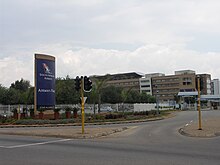
Airways Park, the head office of South African Airways
South African Airways is headquartered in Airways Park on the grounds of O. R. Tambo International Airport.[3][39][40] The building was developed by Stauch Vorster Architects.[41] Airways Park was completed in March 1997 for R70 Million ($17.5 Million).[42] The fourth floor of the West Wing of the Pier Development of O. R. Tambo has the head office of SA Express.[43][44][45]
Ground transport
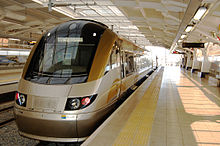
Gautrain at O. R. Tambo Intl Airport
Rail transit
A transit terminal has been built between the domestic and international terminals. It houses the Gautrain station linking the airport to Sandton, a major business district and a primary tourist area, and, from there, the rest of the Gautrain system.
In September 2006 Gauteng Province contracted Bombardier Transportation for a rail link connecting Johannesburg, Pretoria, and the airport, with construction to begin immediately.[46] The section linking the airport to Sandton in Johannesburg was completed on 8 June 2010 in time for the World Cup. Trains run 90 trips per day and carry an estimated 8000 passengers daily.[47]
Car
The airport is easily accessible by car and it is located in northeast Johannesburg on the R24 Airport Freeway, which can be accessed by the R24 (South Africa) and the R21 highway. The R24 intersects with the R21 near the airport and with the O. R. Tambo Airport Highway. This highway goes through the airport terminals, separating them from the parking bays, but it branches off into two directions: "departures" and "arrivals", and then it rebranches into the intersection.
Bus
Five bus city lines, operated by Metrobus and Putco, pass through the airport twice a day. The buses are accessible in the morning and the evening, when there are many passengers departing and arriving. There are also private bus lines operating express buses to the CBD of Johannesburg, as well as other locations.
Accidents and incidents
- 20 October 1957 – A Vickers Viscount G-AOYF, operated by Vickers on a test flight, was damaged beyond economic repair when the starboard undercarriage collapsed following a heavy landing.[48]
- 1 March 1988 – A Comair Embraer EMB 110 Bandeirante ZS-LGP, exploded in mid air whilst on final approach. All seventeen occupants were killed. A passenger was suspected of detonating an explosive device but to this day it has never been proven.[49]
- 22 April 1999 – A Boeing 727 was damaged beyond repair by large hailstones while on approach for landing. The aircraft landed safely with no loss of life.[50]
- 3 November 2001 – A Reims-Cessna F406 crashed shortly after takeoff from runway 03R, killing all 3 occupants. The aircraft did not have a valid certificate of airworthiness at the time of the incident.[51]
- 9 April 2004 – An Emirates Airbus A340-300 A6-ERN operating flight EK764 from Johannesburg to Dubai sustained serious damage during takeoff when it failed to become airborne before the end of the runway, striking 25 approach lights, causing four tyres to burst which in turn threw debris into various parts of the aircraft, ultimately damaging the flap drive mechanism. This rendered the flaps immoveable in the takeoff position. The aircraft returned for an emergency landing during which the normal braking system failed as a result of the damage. The aircraft was brought to a stop only 250 metres from the end of the 3,400-metre runway using reverse thrust and the alternate braking system.[52][53] In their report, South African investigators found that the captain had used an erroneous take-off technique, and criticised Emirates training and rostering practices.[54]
- 25 March 2006 – A gunman held up guards at the airport gates. Others armed with AK-47 assault rifles held up guards and police at a South African Airways aircraft and helped themselves to bags of pound sterling banknotes flown in from Britain. Several airport security staff were implicated in the heist.[55]
- 22 December 2013 – A British Airways Boeing 747-400 G-BNLL operating flight BA33 collided with a building at the airport. Four ground-handling staff in the building sustained minor injuries. As of February 2014, the aircraft was put out of service.[56][57]
- 26 October 2015 – A British Airways operated by Comair Boeing 737-400 ZS-OAA operating flight BA6234 from Port Elizabeth suffered a gear collapse while landing at the airport. There were no injuries.[58][59]
- 7 March 2017 – A heist, remarkably similar to the heist in 2006, was carried out by a gang of up to 13 robbers who stole a huge sum of used foreign currency notes collected from South Africa's banks and foreign exchange services. The money was to be transported to London by South African Airways.[60][61]
See also
- List of airports in South Africa
- List of South African airports by passenger movements
References
^ ab "O. R. Tambo International airport – Economic and social impacts". Ecquants. Retrieved 7 September 2013..mw-parser-output cite.citation{font-style:inherit}.mw-parser-output q{quotes:"""""""'""'"}.mw-parser-output code.cs1-code{color:inherit;background:inherit;border:inherit;padding:inherit}.mw-parser-output .cs1-lock-free a{background:url("//upload.wikimedia.org/wikipedia/commons/thumb/6/65/Lock-green.svg/9px-Lock-green.svg.png")no-repeat;background-position:right .1em center}.mw-parser-output .cs1-lock-limited a,.mw-parser-output .cs1-lock-registration a{background:url("//upload.wikimedia.org/wikipedia/commons/thumb/d/d6/Lock-gray-alt-2.svg/9px-Lock-gray-alt-2.svg.png")no-repeat;background-position:right .1em center}.mw-parser-output .cs1-lock-subscription a{background:url("//upload.wikimedia.org/wikipedia/commons/thumb/a/aa/Lock-red-alt-2.svg/9px-Lock-red-alt-2.svg.png")no-repeat;background-position:right .1em center}.mw-parser-output .cs1-subscription,.mw-parser-output .cs1-registration{color:#555}.mw-parser-output .cs1-subscription span,.mw-parser-output .cs1-registration span{border-bottom:1px dotted;cursor:help}.mw-parser-output .cs1-hidden-error{display:none;font-size:100%}.mw-parser-output .cs1-visible-error{font-size:100%}.mw-parser-output .cs1-subscription,.mw-parser-output .cs1-registration,.mw-parser-output .cs1-format{font-size:95%}.mw-parser-output .cs1-kern-left,.mw-parser-output .cs1-kern-wl-left{padding-left:0.2em}.mw-parser-output .cs1-kern-right,.mw-parser-output .cs1-kern-wl-right{padding-right:0.2em}
^ "O.R. Tambo Airport Passenger Statistics". Airports Company South Africa. Archived from the original on 28 August 2012. Retrieved 15 January 2013.
^ ab "Background[permanent dead link]". Ekurhuleni. 3 (3/8). Retrieved 30 September 2009.
^ World Cup improvements at Johannesburg airport nearly complete YouTube (5 April 2010).
^ Bulpin, T.V. (1980). Mayhew, Vic; Duncan, Tony; Handler, Rosemund, eds. Illustrated Guide to Southern Africa (2 ed.). Reader's Digest. p. 198, col. 1. ISBN 0-620-04650-3.
^ "OR Tambo now official". News24. 27 October 2006. Archived from the original on 5 November 2006. Retrieved 27 October 2006.
^ "Jhb O.R. Tambo International Airport". www.flysaa.com. Retrieved 2018-08-24.
^ abcdefghij Greathead, Walter Robinson; Hawkins, Robert Drake (January 1948). "First stages in the construction of the Jan Smuts Airport, Johannesburg - Historical". Civil Engineering = Siviele Ingenieurswese. 46 (1): 224–225.| – via Sabinet (subscription required)
^ abcd Mitchell, Malcom (October 2014). "Chapter 9 : Airport infrastructure development in South Africa - a rapidly growing sector of the transport 'family' : infrastructure". Civil Engineering = Siviele Ingenieurswese. 22 (9): 49–51.| – via Sabinet (subscription required)
^ abcdef Westwood, A.R.; Klintworth, K.E.; Kemp, W.J. (October 1971). "The Boeing 747 hangar at Jan Smuts Airport". Civil Engineering = Siviele Ingenieurswese. 13 (10): 339–348.| – via Sabinet (subscription required)
^ TIMELINE −70s. Concorde Sst (21 January 1976).
^ "Details p of Air Rhodesia Flight RH825". Viscount Disasters. Retrieved 12 November 2006.
^ abcde "Airside corridor facilitates passenger handling at Jan Smuts". Civil Engineering = Siviele Ingenieurswese. 1 (11): 14–16. December 1993.| – via Sabinet (subscription required)
^ Busiest Airports in Africa [Archive] – PPRuNe Forums. Pprune.org.
^ Airports Company South Africa Annual Report – Part I, archived from the original on 2011-07-20
^ Wolmarans, Riaan (10 July 2006). "Welcome to OR Tambo Airport". Mail&Guardian. Archived from the original on 17 July 2006. Retrieved 22 September 2006.
^ Oliver R Tambo (Johannesburg) International Airport (JNB/FAJS). Airport Technology (15 June 2011).
^ "Climate and weather in Johannesburg and on the Highveld, South Africa". Southafrica-travel.net. Retrieved 11 May 2013.
^ "South African Civil Aviation Authority, AIRAC AIP Supplement S087/12, 20 September 2012" (PDF).
[permanent dead link]
^ abc "OR Tambo INTL RWY 03L-21R" (PDF).
^ abc "OR Tambo INTL RWY 03R-21L" (PDF).
^ "FAOR Ground Movement chart" (PDF).
^ "Contact Us". Mango. Archived from the original on 12 May 2013. Retrieved 20 May 2013.Physical address: Mezzanine Level, Domestic Departure Terminal, O.R. Tambo International Airport, 1627
^ ACSA news Archived 20 July 2011 at the Wayback Machine., Airlines moving to Terminal B.
^ "Flight prices to St Helena announced - Saint Helena Local". 29 August 2017.
^ "Flight prices to St Helena announced - Saint Helena Local". 29 August 2017.
^ https://www.flyairlink.com/flightschedule
^ "Airlink-Ascension Island Government". Ascension Island Government. 5 October 2017. Retrieved 15 October 2017.
^ 2017, UBM (UK) Ltd. "Cemair adds Hoedspruit service from August 2017".
^ "Congo Airways adds new African destinations in May 2018". routesonline. Retrieved 29 May 2018.
^ "Fastjet to reintroduce Johannesburg-Vic Falls flights - The Chronicle". www.chronicle.co.zw.
^ https://www.ch-aviation.com/portal/news/65664-south-africas-federal-air-to-operate-for-singita
^ ab 2017, UBM (UK) Ltd. "South African Airways intra-Africa service changes from Oct 2017".
^ http://maldives.net.mv/26792/south-african-airways-to-begin-direct-flights-to-maldives-south-in-november/
^ https://www.flysaa.com/cms/ZA/Saa_Cargo_new/flysaa_cargo_INT.html
^ "O. R. Tambo International Airport – Passenger Statistics". Airports Company South Africa. Archived from the original on 29 October 2013. Retrieved 23 October 2013.
^ "ACSA – Cape Town Aircraft Statistics". Airports Company South Africa. Archived from the original on 21 April 2012. Retrieved 23 November 2011.
^ "Statistics". www.airports.co.za.
^ "South African Airways – Corporate Travel Terms and Conditions" (PDF). South African Airways. Retrieved 23 June 2010.... with its principal place of business at No 1 Jones Road, Airways Park, O.R. Tambo International Airport
[permanent dead link]
^ "Policies & Disclaimer". South African Airways. Archived from the original on 17 November 2009. Retrieved 23 June 2010.Physical address for receipt of legal service: Airways Park, 1 Jones Road, OR Tambo International Airport, Kempton Park, Gauteng, South Africa.
^ Beaver, Robyn (2004). 1000 Architects. 1. Images Publishing. p. 504. Retrieved 23 June 2010 – via Google Books.
ISBN 1-876907-91-6,
ISBN 978-1-876907-91-4
^ "Printable version of the site." Stauch Vorster Architects. 10/18. Retrieved 23 June 2010.
^ "Contact Us". SA Express. Retrieved 6 February 2011.OR Tambo International Airport Head Office:[...]
[permanent dead link]
^ "About Us Archived 19 August 2010 at the Wayback Machine.." SA Express. Retrieved on 6 February 2011. "The airline's head office is based at OR Tambo International Airport in Johannesburg."
^ "Legal Archived 2 February 2011 at the Wayback Machine.." SA Express. Retrieved on 6 February 2011. "Street Address: 4th Floor Offices, West Wing, Pier Development, Johannesburg International Airport"
^ Grant, Tavia (28 September 2006). "Bombardier wins $1.65-billion in contracts". Globe and Mail. Canada.
[permanent dead link]
^ SouthAfrica.info (13 October 2006). "SA's high-speed train on track". Archived from the original on 17 October 2008. Retrieved 11 October 2008.
^ "Accident description". Aviation Safety Network. Retrieved 8 September 2009.
^ ASN Aircraft accident Embraer 110P1 Bandeirante ZS-LGP Germiston, c. 13 km SW of Johannesburg International Airport (JNB). Aviation-safety.net.
^ "Boeing B727-23 (sic), Johannesburg International Airport" (PDF). South African Civil Aviation Authority. Retrieved 4 November 2009.
^ "ReimsF406 – 700m South of the threshold of Runway 03R FAJS" (PDF). South African Civil Aviation Authority. Retrieved 4 November 2009.
^ http://avherald.com/h?article=3dd14563&opt=0
^ "ASN Aircraft accident Airbus A340 A6-ERN". Aviation Safety Network. Retrieved 18 December 2011.
^ David Learmount (11 January 2006). "Emirates censured in Airbus A340 Johannesburg runway overrun probe". Flightglobal. Retrieved 18 December 2011.
^ Nine in court after Joburg airport heist – South Africa | IOL News. IOL.co.za (18 April 2006).
^ http://avherald.com/h?article=46d6e18c&opt=0
^ Malkin, Bonnie (22 December 2013). "British Airways plane collides with building at Johannesburg airport". The Daily Telegraph. London.
^ http://avherald.com/h?article=48e5e437&opt=0
^ Kubheka, Thando (26 October 2015). "British Airways Plane in 'Incident' at OR Tambo". Eyewitness News. Retrieved 9 March 2017.
^ Times Staff (9 March 2017). "The shocking inside story of the R200m OR Tambo heist". businesslive.co.za. Rand Daily Mail. Retrieved 9 March 2017.
^ Hosken, Graeme; Cowan, Kyle (7 March 2017). "BREAKING NEWS: Multi-million cash heist at OR Tambo Airport". Times Live. Retrieved 9 March 2017.
External links
 Media related to OR Tambo International Airport at Wikimedia Commons
 O.R. Tambo International Airport travel guide from Wikivoyage
 Media related to OR Tambo International Airport at Wikimedia Commons
 O.R. Tambo International Airport travel guide from Wikivoyage


